Last month I went to Italy--Rome for a few days, then a week and a half in Sicily. I knew the birdwatching wouldn't be stellar, but I had hopes of seeing at least some common birds that were unfamiliar to me. Heck, even the house sparrow has an Italian version that's all redheaded and crazylooking.
In Rome, I found plentiful evidence that birds had been seen in the past, at least by sculptors:


Hmm, on second thought I kind of doubt anyone saw this whale-bird.

Aaaand unless there were some sculptors observing during the Permian (age of 8 foot scorpions), they probably never saw a peacock THIS big:

On Palatine Hill I managed to find some live-action birds doing a love scene:

Unexpectedly, there was also a small flock of parrots hanging out there. They reminded me of the parrots I see in the Presidio. I don't know my parrots, but I think this is probably a Monk Parakeet. What's the difference between a parrot and a parakeet? DNA. How could a parrot-keet live in a non-tropical location? Well, Rome's not exactly cold, and there's plenty of tourist trash to eat. Also the berries from this tree, which looks like it's a yew.

Hooded crows were also ubiquitous throughout Rome. In fact this was the first kind of bird I saw after landing--perched along the roadside enroute from the airport.

Once we reached Sicily, there was still more artistic evidence that sometime in the past, it was inhabited by grotesque, bug-eyed eagles:

And some human-swan horse-swan hybrids:

In search of actual, living birds, we journeyed to one of Sicily's giant regional parks: Madonie. On the way we stopped at a tiny town called
Castelbuono, which was inhabited quite picturesquely by a flock of what I think were crag martins:

They taunted me, perching on nooks in the sheer wall and poking their little heads out.

Also enjoying the nooks of Castelbuono was a big flock of jackdaws. They look like stubby-faced crows. Later on, we saw them perched along the highway, hundreds of them, but all spaced out in pairs.

Another common bird was the collared dove, seen here mooning the photographer with its distinctive white tailfeathers.

Finally, we made our way to an actual wildlife reserve, Vendicari, where we hoped to see the thousands of flamingoes that winter there. Alas, they hadn't arrived yet, but we spotted a few other friends, including this guy, which I think is a redshank:

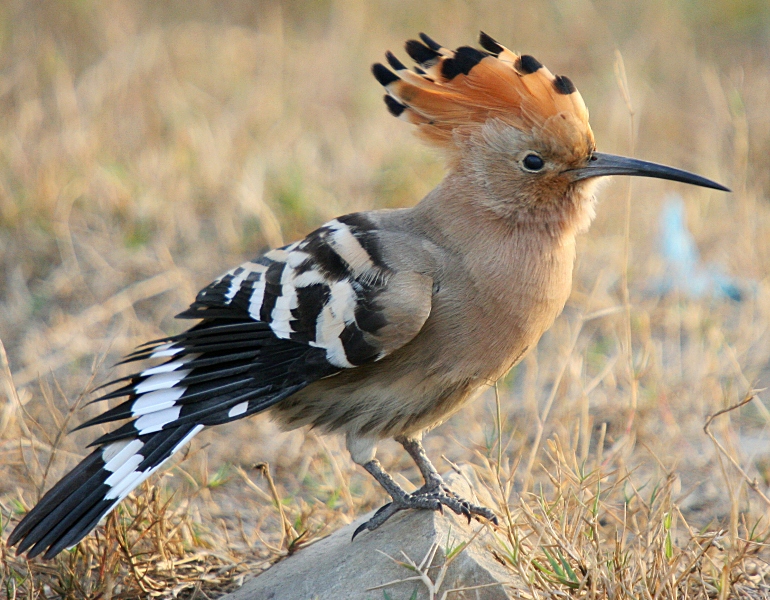
We didn't find my dream bird (the
hoopoe). We asked our host at a bed and breakfast we stayed at about it, but he didn't know the word "upupo." Then I tried to describe it as similar to a parrot, with a crest. He thought we meant the "
ghiandaia," (literally "acornist") (turns out that is a jay), and explained that during this time of year they are all up in the mountains eating olives. Something to look for next time, I guess!
 Migrant birds are returning to the lake. Here's a glaucous winged gull that attracted my attention with its strange yodeling call. It sounds quite different from a Western gull when claiming food. Or maybe only when it's claiming a bit of roast chicken someone dumped. I don't know whose action is more surprising: the guy who thought it would be fine to throw a chicken to the birds, or the pigeons who thought it would be fine to eat it. Blech, guys, srsly.
 Ruddy ducks have arrived. These are easy to ID at long distances because of the white cheek, and the (usually) long pointy tail.
 Ring billed gulls are back too and looking for action. "Hey, where's MY roast chicken?"
 And of course scaups. I have vowed that this will be the year I learn to tell greater from lesser. I have long wondered why the majority of scaups I see at the lake are male. One theory I had was that females and males arrived and left at different times. The first one I saw this year was female: