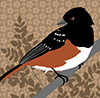
Hmm, that taxdermy job might fool pigeons, but it didn't fool me. And come to think of it, that pigeon nest is right around the corner of the building from this guy, so I'm guessing the pigeons weren't fooled either.
 Hummingbird that color coordinates itself with its perch:
 Check out the lovely blue green face of this great egret.
 And check out egret's supercool park bench hangout. I like its posture here--it had just flown up and landed.
 It also comes with a very extendable head, and a bad urban attitude. It was actually taller than me when it did this:


 And buckeye is blooming now, an adaptation that lets a broad-leaved deciduous tree survive California's summer--it makes a very early effort to get pollinated before it runs out of water and sheds all its leaves around July:
 As it turns out, Flounder was too big for Scuttle to swallow.
 Filthy little hobbitses. They stole it from us.
 Why do blackbirds attack people? "Mobbing" is an infamous behavior of many birds, including blackbirds, where they attack a predator, either individually or in groups. Thus, you might think that this behavior serves to drive the predator away, keeping the blackbird's babies safes for anothers days. However, in Blackbirds of the Americas, Gordon Orians makes a different argument. He notes that pecking people in the back of the head (or otherwise getting macho on a predator) is NOT correllated with extra success in the baby department. So why are they wasting their time? One possibility is that they are merely showing off their machismo for the benefit of any watching ladies. Another possiblity is that birds become agressive when they have a bad bit of territory (one with humans always tramping through it), and that those extra predators in the bad territory account for the lower nest success.

 This is another bird that you might not notice right away (especially if you are expecting only seagulls). But you can often hear their distinctive calls, which they seem to make as they chase each other around (read "constantly.") If you get a closer look, you can see that they have forked tails, black heads, and wings so pointy they could be used as ninja stars.
 ...Tail dragging... Circle Spinning...
 But I never could catch the rascals in the act... until yesterday! BAM. Money Shot:
 I saw these two covertly "Billing" each other, and my Pidgey-Sense started tingling. I barely had time to turn on my camera before the pigeons leaped directly from First Base to a Home Run. This tender scene lasted all of two cloaca-grinding seconds before they were back to pecking innocently at invisible seeds, nary a blush to be seen on their feathery cheeks.
 Pigeons often nest on ledges, especially under roofs or bridges. They don't seem to mind tight spaces, and can even pile sticks right on top of those spiny things put up to dissuade them.
 I don't think the eggs in this nest have hatched yet, but I'm keeping an eye on it; my book says it will take 16-19 days. The pigeon family is one of the few that produces "crop milk" to provide protein to their hatchlings. That might be one reason why they develop so quickly and can breed a mere 6 months after hatching--they drink their Milk! It does a pigeon body good.

 It looks like some Canada geese have managed to hatch some chicks this year. I saw one pair with a single chick...
 I recently looked up the City of Oakland's report on Canada Goose management and learned that they are no longer trying to suppress breeding of geese (if they ever were), because the permanent resident geese don't create as strong a health hazard (=mounds of nasty poo everywhere) as the hundreds of migrant geese which spend summer at the lake.